
News
Fender rolling can fix tire rub: but it comes with risks
Paint cracks, warped arches and rust are possible downsides

- October 11, 2026
- Updated: October 11, 2026 at 1:04 PM
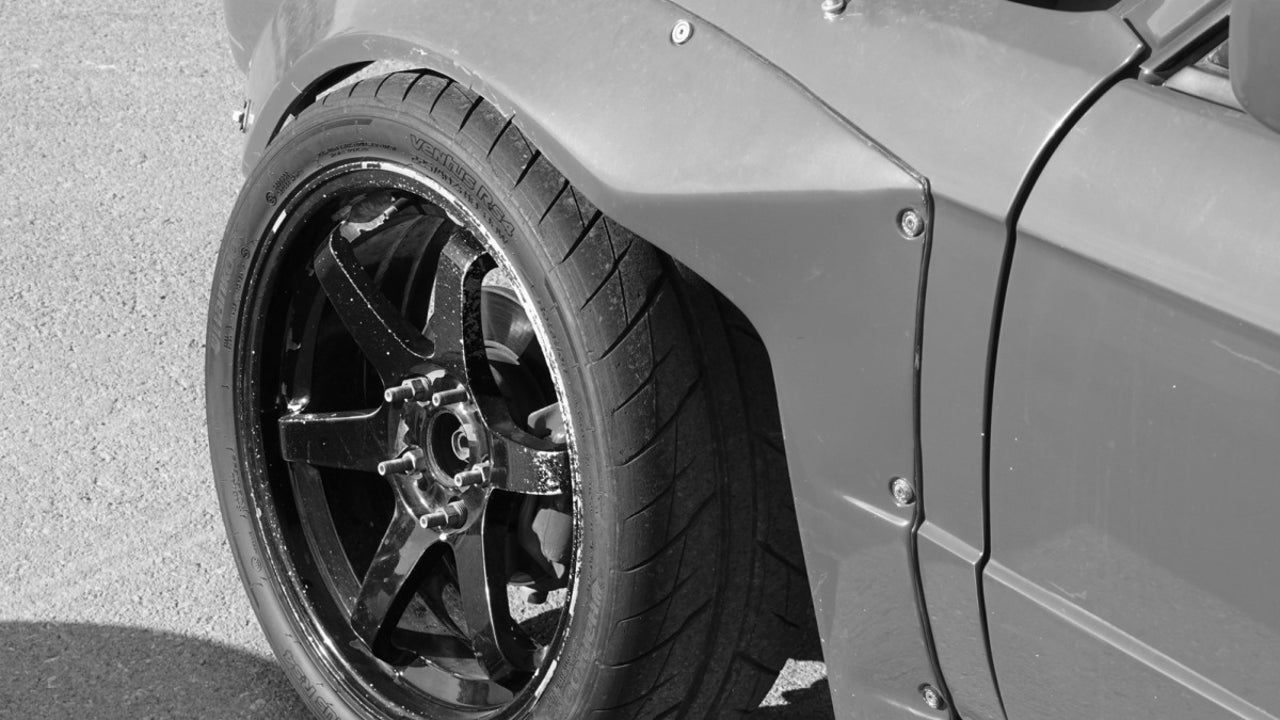
By 2025, fender rolling has become a pretty standard fix for tire rub after a wheel or suspension upgrade. Rub usually shows up when the car hits a bump or when the steering is at full lock. Wider wheels, fatter tires, a lowered car, the wrong offset, worn shocks, sagging springs, or bad alignment can all set it off.
A lot of the time, the tire is catching the inner fender lip, that 90-degree folded edge that can sit right in the tire’s path. When that happens, it can chew into the sidewall and lead to tire wear, body damage, or even a puncture. Rolling that inner lip upward with a hub-mounted roller and a heat gun creates extra clearance. The added space can be a few millimeters, or as much as 3/8 inch in one AutoRestorer test, and from the outside there’s usually little to see.
If the rubbing only happens once in a while, rolling the fenders is often worth a shot. Still, there are real risks. Even if the paint is warmed to around 150 to 170 degrees Fahrenheit, it can still crack. The wheel arch can end up wavy, old body filler can split, and the seam can hold moisture and dirt, which raises the chance of rust.
There are other ways to deal with it too. You can try bump stops or spacers, trim the plastic liners, add camber, switch to a narrower tire, or have a shop correct the offset. And with the aftermarket wheel market hitting $40 billion in 2025, plus EVs getting heavier, rubbing may only become more common.
Keep up with Softonic
Get our latest tech news first, wherever you read.
Manuel Bosque covers software at Softonic: desktop programs, productivity tools and the small utilities that solve one problem well. His approach is practical — what a program actually does, what it asks in return and who it is for — which is why he distrusts feature lists and prefers to test. He is part of the team that decides how software gets covered on the site, and works daily with AI tools applied to editorial production.
Latest from Manuel Bosque
You may also like
- News
Tech layoffs in 2026 update: 206,000 jobs cut worldwide
Read more
 News
Apple Intelligence clears China hurdle: iPad and Mac approved ahead of December rollout
Read more
 News
Grok now says Elon Musk replied to a Nazi account on X
Read more
 News
Samsung Galaxy S27 leaks: Pro and Ultra may dominate the lineup
Read more
 News
Elden Ring: Path of the Cardinal Sin ends with Melina art, not DLC
Read more
 News
Xbox Series X is still worth buying in 2026: 4K power, Game Pass value
Read more