
News
Meet the Woman Behind the Legend: The Untold Story of Pauline Kael, the Inspiration for Tarantino’s Latest Film
Discover the protagonist of The Movie Critic


- March 15, 2023
- Updated: July 2, 2025 at 2:49 AM
Quentin Tarantino has made a surprise when it was leaked to The Hollywood Reporter that he already has the script ready for what will be his last film, and he wants to shoot it next fall. The director has always said that he wants his filmography to be composed of ten films, so the announced The Movie Critic will be the last of them.
The news has generated a stir around the world. On the one hand, many of us are happy to see a new Tarantino film on the big screen. But on the other hand, we are saddened to learn that this will be the last time, in his own words, that we will be able to enjoy a feature film directed by him.

This is not to say, of course, that we won’t continue to have more of Tarantino as a producer, screenwriter or even a major influence on many other filmmakers. But his work as a director is commendable, and “losing” him will be a very big blow to a Hollywood in the doldrums.
According to what has been announced, the film will be set in Los Angeles in the late seventies, similar to what was done in Once Upon a Time in Hollywood -although this one was set in the sixties-. For its part, the protagonist will reflect the life of Pauline Kael, a famous film critic who revolutionized the industry with her words.
But what is Kael’s real story and why does Tarantino want to pay tribute to her with his latest film?

The story behind The Movie Critic
Pauline Kael’s story is that of one of the most influential film critics of the 20th century. With her irreverent style and passion for film, Kael became a legendary figure in the film industry, and despite the state of criticism today, her influence is still palpable today.
Pauline Kael’s façade was that of a tough, sophisticated woman whose opinion was always respectable and whose pulse did not tremble when it came to putting herself on a par with the great directors and producers of the time. But the truth is that a very interesting personal life also awaited her.
Born in Petaluma (California, United States) in 1919, from an early age she developed a passion for literature and film. At the age of 17, she left home to move to San Francisco, where she began working in a bookstore and writing movie reviews for a small local newspaper. But her talent for film criticism soon caught the attention of The New Yorker magazine, which hired her as a film critic in 1968.

During her career at The New Yorker, Kael became an influential force in the film world. Known for her straightforward style and lack of inhibitions, her opinion was not always popular with filmmakers and more traditional critics, but her fresh and honest perspective made her a respected and admired figure by many.
However, Kael’s personal life was not always as glamorous as his career. She had an affair with film director Warren Beatty. But, although the relationship was passionate and lasted several years, Kael eventually parted ways with Beatty due to their creative differences and her desire to move on with her career.
Throughout her life, Kael also had relationships with several other men, including writer James Agee and film director Jean-Luc Godard. Although she never married or had children, her love life was always the subject of speculation and rumor in the film industry.
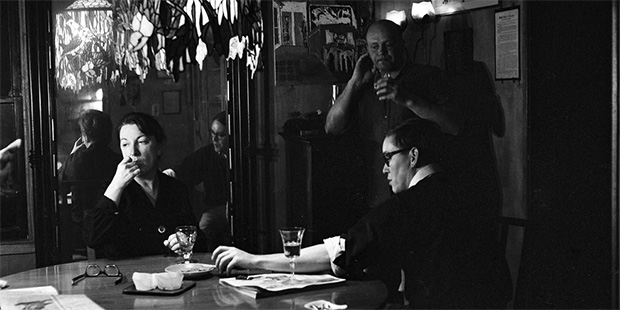
But Kael’s true passion was always cinema. From Hollywood classics to the most experimental and avant-garde films, Kael loved everything about cinema. His writing was full of enthusiasm and excitement for film, and she was always looking for new ways to experiment with the language and structure of film criticism.
In 1971, Kael wrote a review of the film Dirty Harry that caused a stir in the film industry. In the review, Kael praised Clint Eastwood’s performance and Don Siegel’s direction, but harshly criticized the film’s message, which she considered misogynistic and fascist. Her opinion was widely criticized by other film critics and industry figures, but Kael stood her ground, which earned her more than one enemy.
In the years that followed, Kael continued to write influential and provocative reviews, becoming an iconic figure in the film industry. But as the 1980s drew to a close, her health began to deteriorate. Kael was diagnosed with Parkinson’s in 1990, forcing her to retire from film criticism in 1991. She finally died in 2001 at the age of 82.

How will Tarantino adapt Pauline Kael’s story?
Considering Quentin Tarantino’s creative freedom when it comes to adapting true stories – just take a look at Once Upon a Time in Hollywood and the Charles Manson story – Kael’s life may only serve as a small basis for what will be the final film.
Taking advantage of the 1970s and a setting like Los Angeles, the director has hundreds of possibilities to explore in his next and final film. Of course, he will have to decide well which bullets to spend as he will never again face the director’s chair.
Keep up with Softonic
Get our latest tech news first, wherever you read.
Cultural journalist specialized in film, series, comics, video games, and everything your parents tried to keep you away from during your childhood. Also an aspiring film director, screenwriter, and professional troublemaker.
Latest from Juan Carlos Saloz
You may also like
 News
It seems we already know why Microsoft went down all over the world: a bug in the company itself
Read more
 News
Getting one letter wrong looking for your favorite AI can infect your computer
Read more
 News
Will your PS5 be able to handle GTA 6 the way you’d want it to? It’s not all about 30 FPS
Read more
 News
Nvidia CEO search continues: Trump backs Jensen Huang’s return
Read more
 News
Xbox reveals Project Helix: its next-gen console plan with PC access and backward compatibility
Read more
 News
Robert Pattinson confirmed as James Bond: Amazon starts a new 007 era
Read more