
News
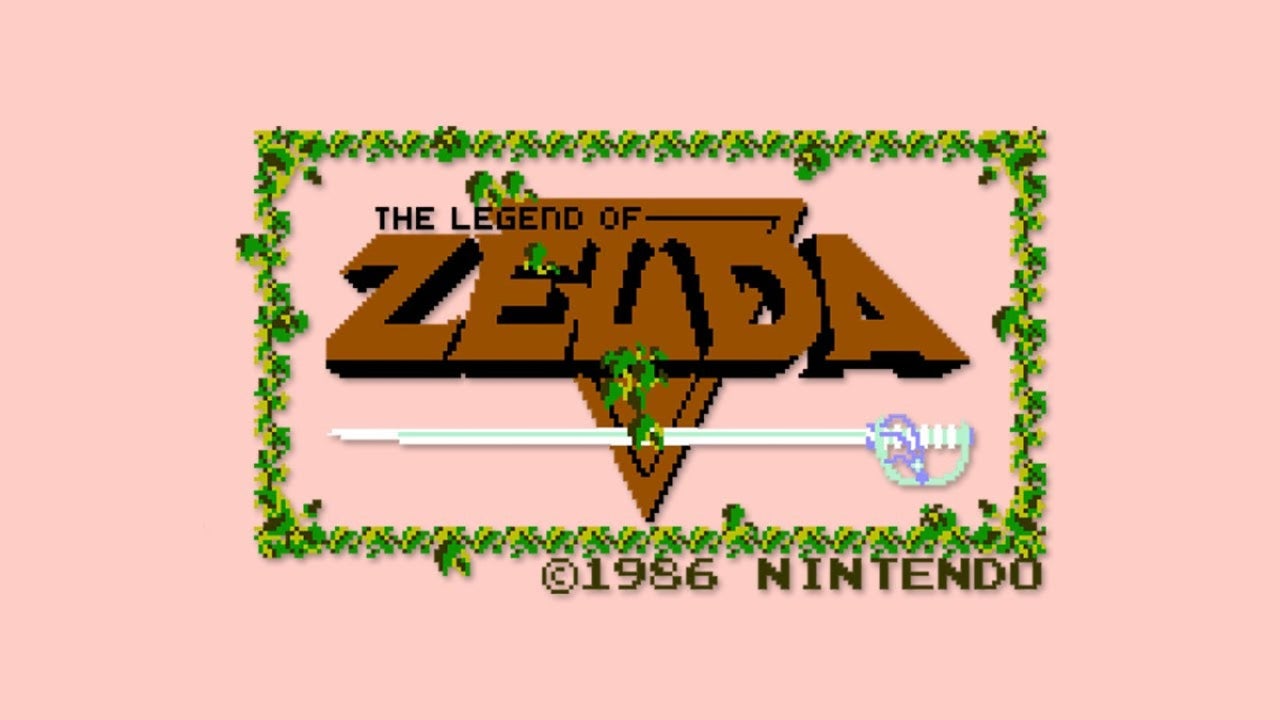
The Legend of Zelda turns 40, and we tell you why its first installment was so important for the video game industry
Its secret-driven design built on Japan’s early action RPG boom

- September 11, 2026
- Updated: September 11, 2026 at 9:48 AM
The remake of The Legend of Zelda: Ocarina of Time has caused a huge stir. Many people have loved it, just as many people have hated it, and there doesn’t seem to be any middle ground between the two. It’s normal for it to ignite so much passion because The Legend of Zelda is an important franchise for the medium and one that has gained many fans throughout its 40 years of history. But besides that, it’s much more important than many people might imagine.
Because when it came out 40 years ago it was a big deal. One that couldn’t have happened if the groundwork hadn’t already been laid for its success. Because the first The Legend of Zelda was a revolutionary game because of all the games that came right before it and that made it possible for it to become the legendary franchise it is today. But it’s a story a bit more complex than people usually tell it.
Action RPGs originated in Japan
Before The Legend of Zelda there were other games that were shaping what we now know as the Action RPG. And perhaps the first and most influential was The Tower of Druaga. This Namco arcade game, designed by Masanobu Endō, which wasn’t released outside Japan until decades later, had one very distinctive trait: we had to make our way up a tower discovering hidden secrets with no clues to guide us. Facing enemies and a time limit on each stage, you could end up unable to beat the game or get past a certain level if we didn’t find the secret of certain levels.
How could people beat the game? By sharing information. In arcades all over Japan notebooks were left out so people could write the information they were discovering in them. Sometimes true, sometimes false, so they could keep making progress together through the terrifying Druaga. Something that turned it into an enormous success that would become a tremendous inspiration for later Japanese RPGs, but also much later games, like Dark Souls.
It would be so influential that two franchises, at roughly the same time, would take note of what it did to build their own ideas. One was Dragon Slayer and the other Hydlide.
Dragon Slayer, developed by Nihon Falcom, is considered the progenitor of the Action RPG as we know it. Very action-oriented and with dungeon-crawling elements, it would introduce item management as the main new feature compared with its predecessor. Meanwhile, Hydlide, released only three months later, would stand out for also taking inspiration from an RPG classic, The Black Onyx, bringing an open world to explore to the Action RPG formula. And one in which to die as well. Because it was easy to go off in different directions where it was perfectly possible to end up where you weren’t supposed to go before knowing where you were actually supposed to go next.
The game that fused everything and smoothed the edges
All of this happened between the middle of 1983 and the end of 1984. The Legend of Zelda didn’t come out until February 21, 1986. Meanwhile, during 1985 other games kept evolving the formula constantly. Dragon Slayer II: Xanadu introduced side-scrolling, something it would take The Legend of Zelda two console generations to introduce, Hydlide II: Shine of Darkness would lean more toward the RPG side by placing more emphasis on equipment and what you could do with it, and many other games would try to draw more inspiration from Wizardry than from Ultima or The Black Onyx in making their games.
But Nintendo would be the one to come out on top. The Legend of Zelda would find the perfect fusion of all the elements: a fascinating and complex open world, in the style of Hydlide, but one that didn’t punish failure excessively and that emphasized combat as much as exploration, as Dragon Slayer did. They did this by emphasizing items with very specific uses, in the style of The Tower of Druaga, but with more specific dungeons, closer to The Black Onyx, without abandoning their own personality: a narrative touch of its own in the form of the Triforce and a few touches of its own in the manual and a few lines of dialogue.
We all know the result. The game was received with enthusiasm and was considered, by many, a masterpiece. It sold 6.51 million copies over the course of the NES’s life and was one of the console’s biggest bestsellers. Spawning an entire franchise that still endures today.
A franchise that has changed a lot. No doubt about it. But the glory of that first The Legend of Zelda comes from studying what everyone else was doing and knowing how to take only one particular aspect from each of them to create the perfect game for them. In that sense, The Legend of Zelda didn’t create the Action RPG, but it refined it and gave it shape. And it hasn’t stopped doing that for years. That’s why it’s fascinating. Because it gave us a masterful lesson in design. And even today it’s an excellent game to come back to and play again.
Cultural journalist and writer with a special interest in audiovisuals and everything that can be played. I'm not here to talk about my books, but you can always ask me about them if you're curious.
Latest from Álvaro Arbonés
- A shooter mixing Marvel and Star Wars characters is being delayed because, indeed: they want to go all in on AI
- RJ Mitte, *Breaking Bad* star, dies at 34.
- No Man’s Sky is coming to Apple handheld devices very soon
- Tom Cruise suffers the biggest flop of his career: it’s projected that his new movie is going to lose $245 million
You may also like
 News
How to use reference images, video, and voice in Adobe Firefly to generate more consistent concept scenes
Read more
 News
The Legend of Zelda rumor: $519.99 listing is merch, not a new game
Read more
 News
The Boys’ Homelander recast rumor: it only affects the games
Read more
 News
Razer just released Pokémon gaming headsets: Sylveon, Charizard and Lucario
Read more
 News
Parasite Eve could be Square Enix’s next RPG revival: survival horror is booming again
Read more
 News
The X-Files is officially headed to Hulu: Ryan Coogler’s reboot gets a series order
Read more