
News
AI knows how to rhyme, but not how to add: the great mathematical problem of artificial intelligence
The mathematical problem of artificial intelligence reflects to what extent the new technology breaks with the past of computer science

- July 23, 2024
- Updated: July 1, 2025 at 11:08 PM
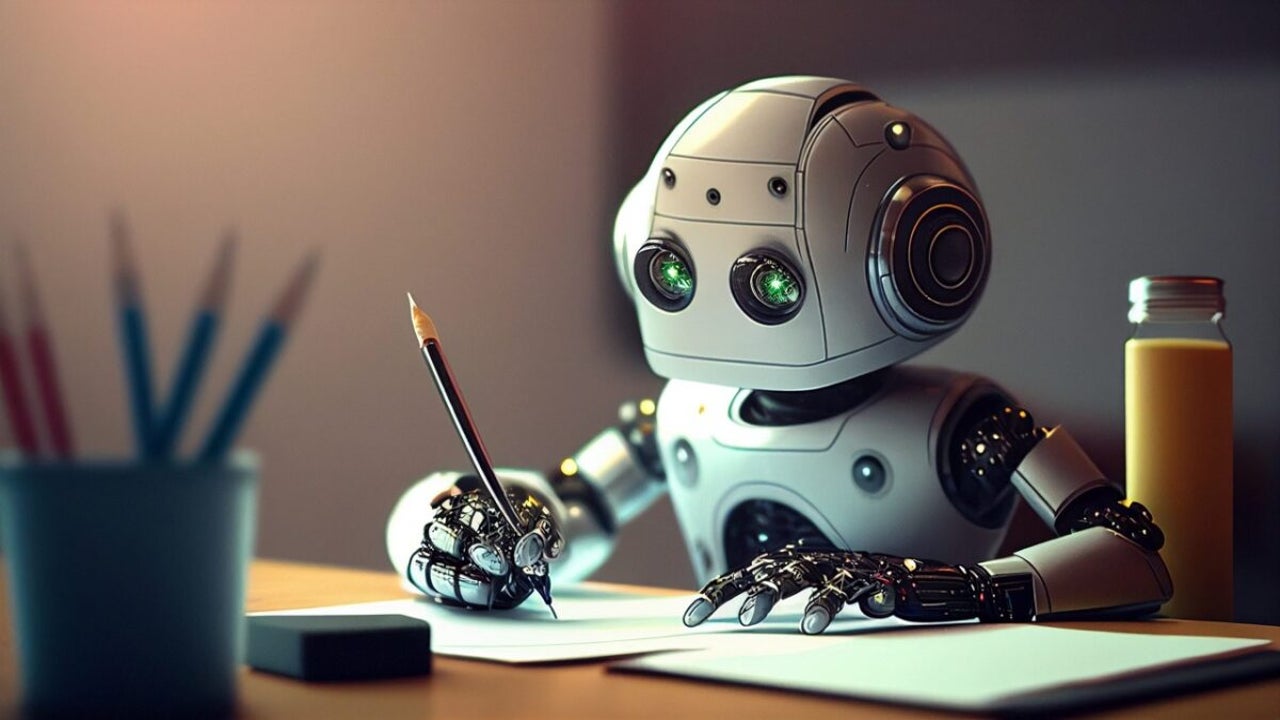
Chatbots like ChatGPT by Open AI can write poetry, summarize books, and answer questions, often with human-like fluency. The curious thing is that, while they are complex and advanced models, and can perform mathematical calculations based on what they have learned, the results can vary and are often incorrect. How? Let’s see.

Chatbots are designed to determine probabilities, not to make rule-based calculations. Probability is not accuracy, and language is more flexible and forgiving than mathematics.
‘Artificial intelligence chatbots struggle with math because they were never designed for it,’ says Kristian Hammond, a computer science professor and artificial intelligence researcher at Northwestern University in an interview for the New York Times.
As the American newspaper says, it seems that the smartest computer scientists in the world have created an artificial intelligence that is more of a poet than a mathematician.
AI is a poet and comedian, but it can’t add and divide accurately
At first glance, this represents a break from the past of computing. Since the first computers appeared in the 1940s, a good summarized definition of computing has been ‘mathematics on steroids.’
Computers have been tireless, fast, and accurate calculating machines. For a long time, computers have been exceptional at crunching numbers, far surpassing human performance.
Traditionally, computers were programmed to follow step-by-step rules and retrieve information from structured databases. They were powerful but fragile. That’s why previous efforts in the field of artificial intelligence hit a wall.
However, more than a decade ago, a different approach emerged and began to produce surprising advances. The underlying technology, called neural network, is based on the human brain.
This type of artificial intelligence is not programmed with rigid rules, but rather learns by analyzing large amounts of data. It generates language based on all the information it has absorbed, predicting which word or phrase is most likely to come next, just like humans do.
Sometimes, artificial intelligence chatbots have struggled with simple arithmetic and mathematical problems that require multiple steps to reach a solution, something recently documented by some technology reviewers.
According to OpenAI, their new version of ChatGPT achieved an accuracy of nearly 64% on a public database of thousands of problems that required visual perception and mathematical reasoning. This figure is a slight improvement over the 58% of the previous version.
It seems like a life lesson for students, worth remembering long after they have forgotten the Pythagorean theorem: don’t believe everything an artificial intelligence program tells you. Don’t trust it too much.
Journalist specialized in technology, entertainment and video games. Writing about what I'm passionate about (gadgets, games and movies) allows me to stay sane and wake up with a smile on my face when the alarm clock goes off. PS: this is not true 100% of the time.
Latest from Chema Carvajal Sarabia
You may also like
 News
NewsChatGPT achieves a 76% increase in its performance
Read more
 News
News'Clair Obscur: Expedition 33' cost a complete fortune, but it's wildly successful
Read more
 News
NewsHelldivers 2 is getting ready to receive its biggest update to date
Read more
 News
NewsThe Game Awards crowned the game of the year last night amid huge controversies
Read more
 News
NewsThe most shocking news from The Games Awards 2025
Read more
 News
NewsThe series returns where you will see Idris Elba like you have never seen him before
Read more