


Why Talking About Internet Security with Your Family Is More Critical Than Ever


- November 7, 2025
- Updated: December 12, 2025 at 11:14 AM
The internet has become an essential tool in daily life: from paying bills to staying in touch with distant family and friends. However, the same space that facilitates communication and access to information also opens the door to scams, deceit, and cyberattacks that specifically affect those less familiar with technology.

Today, more than ever, discussing internet security with your family is a critical task. Cybercriminals exploit trust, a lack of digital experience, and small oversights to insert themselves into people’s lives. While younger generations are typically more accustomed to recognizing warning signs, our parents and grandparents often lack the digital savvy that we possess.
Today, we will explain why these family conversations are fundamental, what the most common risks are, and how the combination of dialogue and technology can strengthen the digital protection of your entire family.
The Most Vulnerable: Parents and Grandparents Are Prime Targets
Our older family members didn’t grow up with the internet and, in many cases, adopted it later in life. This makes them a priority target for scammers looking for easy victims. Among the most frequent attacks are:
- Phishing Emails: Messages that mimic communications from banks, utility companies, or online platforms, designed to steal personal data.
- Fake Invoices: Bills that appear to come from legitimate companies you use, featuring payment links that redirect to fraudulent websites.
- Romance Scams: Fake profiles on social media or dating apps that exploit loneliness to gain trust and then ask for urgent money transfers.
These frauds work because they appeal to emotions—fear, urgency, affection—and because victims don’t always know how to verify if the person on the other end is a scammer or not.
The New Role of Younger Generations: Digital Mentors
If twenty years ago parents taught their kids how to ride a bike or look both ways before crossing the street, in 2025, it is the younger generations who must teach our elders how to navigate the internet safely.

Explaining what a suspicious link looks like, how to create a strong password, or why they should never download files from unknown sources is now a key part of family education. These conversations, although sometimes repetitive, serve as a powerful shield against the most common scams.
Small Habits That Make a Big Difference
Not every risk comes from master hackers or invisible viruses. Often, what opens the door to an attack are small, unsafe habits that seem harmless. Some of the most common among families include:
- Reusing weak passwords across multiple accounts.
- Ignoring software updates, leaving devices exposed to known security flaws.
- Downloading free apps without verifying their source.
- Connecting to public Wi-Fi networks without protection.
Each of these behaviors, taken separately, may seem minor. But combined, they create fertile ground for malware, scams, and identity theft to thrive.
Priceless Conversations
The key to reducing these risks lies in family dialogue. Sitting down with parents and grandparents to patiently explain which practices they should avoid and which ones to adopt can save them from complicated situations. Some practical tips for these discussions:
- Use Concrete Examples. Explaining phishing by showing a real fake email is much more effective than speaking theoretically.
- Be Patient and Avoid Tech Jargon. The goal is for them to understand the core idea, not memorize computer terminology.
- Build Trust. Encourage them to call you before clicking a suspicious link or sending sensitive data.
When Conversation Is Not Enough
Although dialogue is fundamental, the reality is that human habits are not foolproof. Anyone can get distracted and click the wrong link. Therefore, besides talking about security, it is vital to have technological tools that act as a second line of defense.
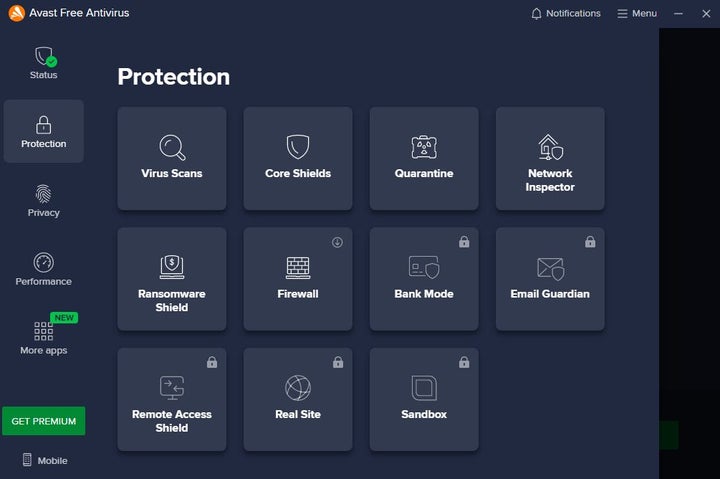
This is where solutions like Avast Free Antivirus help families safeguard both the young and the old in their digital homes.
How Avast Helps Protect the Entire Family
Avast Free Antivirus is designed to address precisely those small oversights that can have major consequences. Its features work quietly in the background, helping to detect and block many common threats before they can cause issues.
- File Shield: Continuously scans the downloads and files in real-time to block many types of known malicious software which are hiding behind a free application or suspicious attachment.
- Behavior Shield: Can detect unusual activity in your operating system, such as processes attempting to alter settings or install themselves without permission.
- Network Inspector: Checks the home network for vulnerabilities, such as weak router passwords or unauthorized connected devices.
- Scam Guardian and Web Guard: Works to block access to fraudulent pages and phishing sites, reducing the risk of users falling into traps disguised as fake forms or invoices.
Taken together, these features work to strength overall online safety, complementing family conversations and minimizing exposure to online threats.
The Power of Example
Younger family members must not only teach but also lead by example. If children insist that their parents use strong passwords but they themselves reuse the same key across all their accounts, the message loses its impact.
Creating a family culture of digital security means that everyone adopts the same practices:
- Using password managers.
- Enabling two-factor authentication.
- Keeping devices updated.
- Relying on proven security solutions.
When adults see that their children practice what they preach, they are much more willing to change their own habits.
Digital Security as a Family Topic
Talking about internet safety doesn’t have to be a lecture or a boring lesson. It can be integrated into family life naturally:
- During Dinner: Commenting on recent cybersecurity news can open the door to discussing how one should act in a similar case.
- At Family Gatherings: Taking the time to help install updates or review settings on grandparents’ devices.
- With Games: Holding a contest for who can create the strongest password or who can spot a fake email the fastest.
Transforming the topic into something everyday and participatory makes it part of the family’s DNA, just like safety rules at home or on the road.
Preparing for a More Complex Future Due to AI
Digital risks will continue to evolve. With the rise of artificial intelligence, scammers are creating more convincing emails, fake voices that mimic family members, or hyper-realistic advertisements. This means the line between digital reality and fiction will become increasingly difficult to distinguish.
In that scenario, families who already have open conversations about cybersecurity and use protection tools will be better prepared to face what’s coming and what is already affecting millions of people worldwide.
Dialogue and Technology: The Formula for Security
In 2025, talking about internet security with your family is more critical than ever. The first step is awareness, achieved through patient dialogue and clear examples. But the second step is action, supported by tools that close the gaps that the human factor can’t always cover.
Avast Free Antivirus, with its real-time protection features like File Shield, Behavior Shield, Network Inspector, and Scam Guardian with Web Guard, provides families with an added layer of protection, helping them navigate the web with greater confidence.
In a world where digital life is inseparable from reality, protecting your loved ones online isn’t just a matter of technology: it’s a demonstration of care, love, and responsibility.
Journalist specialized in technology, entertainment and video games. Writing about what I'm passionate about (gadgets, games and movies) allows me to stay sane and wake up with a smile on my face when the alarm clock goes off. PS: this is not true 100% of the time.
Latest from Chema Carvajal Sarabia
You may also like
 News
NewsThe Game Awards crowned the game of the year last night amid huge controversies
Read more
 News
NewsThe most shocking news from The Games Awards 2025
Read more
 News
NewsChatGPT achieves a 76% increase in its performance
Read more
 News
NewsThe series returns where you will see Idris Elba like you have never seen him before
Read more
 News
NewsLondon will be the chosen city for the next installment of the most romantic saga in cinema
Read more
 News
NewsMilly Alcock debuts as Supergirl in this trailer, and the role seems designed for her
Read more