Strategy (1245 programs)
Pros: All players access the full seasonal card set at season start. Dedicated 2v2 mode with shared board for coordinated strategies. No booster packs or pay-to-win mechanics. Seasonal resets promote meta creativity and fresh deckbuilding.
Cons: Small player community can cause longer matchmaking times. Official macOS support not listed on the primary storefront. Seasonal full resets require repeated relearning each cycle. Community has raised concerns about long-term development status.
Pros: Team-focused design makes cooperation meaningful in every match. Elemental interactions create memorable combo moments. Shared shop progression encourages collective economy decisions. Stylized 3D visuals keep battlefield readability high.
Cons: Heavy reliance on communication limits pickup-and-play with strangers. Card draw randomness can disrupt planned strategies. Chaos in larger waves can obscure individual contributions.
Pros: Hybrid tower defense and RPG progression for tactical depth. Extensive customization with over 1,000 tower combinations. Playable entirely offline, full campaign available without network. Wide variety of defensive structures and special weapons.
Cons: Only six playable commanders limits roster variety. Deep upgrade systems can overwhelm newcomers. Campaign scale favors long sessions over quick matches.
Pros: Deathwing Hero Card enables transformational, choice-driven play. Herald keyword scales end-game power across a single match. Shatter adds layered hand-management with split and recombine options.
Cons: Shatter increases hand-management complexity for some players. Colossal minions expand board complexity and positional decisions. Initial launch saw issues with the in-game shop and Arena rewards.
Pros: Clear, relaxing visuals and a minimalist soundtrack. Three themed block types map to health, turns, and score. Quick sessions designed for repeated score-chasing. Modest Mac requirements: macOS 10.11 or later, 4 GB RAM.
Cons: Compact scope limits long-term campaign play. Niche appeal within the broader strategy category. Single-player focus relies on leaderboards for competition.
Pros: Hybrid board-and-card design creates varied tactical choices. Campaign presents humorous writing and memorable, parody-laden encounters. Multiple character options enable diverse long-term playstyles. Dynamic card effects can change movement and board state mid-game.
Cons: Dice-driven randomness can undermine precise tactics. Primarily single-player, not oriented to competitive multiplayer. Steam listing omits macOS support despite a Mac program listing. Humor and pop-culture references may not suit serious fantasy fans.
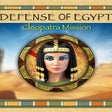
Pros: Sixty missions provide substantial single-player content. Six upgradeable tower classes support distinct defensive roles. Hybrid play with spells and traps encourages tactical variety. Vivid Egyptian aesthetic strengthens the thematic identity.
Cons: No mention of competitive multiplayer features in available details. Direct abilities require micromanagement during intense waves. Non-linear story may fragment pacing for players who prefer linear campaigns.
Pros: Hand-drawn 2D art coupled with an eerie, atmospheric soundtrack. Command up to five ships drawn from eight distinct ship classes. Extensive ship customization with hundreds of weapons and modules. Procedurally generated galaxy maps that vary encounters each run.
Cons: Permadeath ends a run when the entire fleet is destroyed. Steep difficulty spikes reported by players. User feedback highlights repetitive mission structure.
Pros: Rhythm-based combat rewards precise timing and pattern recognition. 85 handcrafted levels provide prolonged challenge and variety. Simple controls that support a deep mastery curve. Atmospheric post-apocalyptic visuals and functional audio cues.
Cons: Unforgiving 'one more try' design requires frequent restarts. Partial controller support leaves some inputs optimized for keyboard. High skill ceiling may deter casual or less patient players.
Pros: Capture-to-transform mechanic forces tactical re-evaluation. Supports Mac M1 and older Intel Core M hardware. Staged levels introduce mechanics progressively for escalation. Mouse and gamepad/touch controls are supported.
Cons: Narrow focus on puzzle stages over competitive multiplayer. Later levels described as maddening, demanding long-term planning. Appeal centered on chess-variant enthusiasts rather than casual players.
Pros: Run-driven progression encourages experimentation with unlockable upgrades. Procedurally generated realms create varied tactical challenges each run. 80s anime-inspired pixel art and isometric perspective give clear battlefield readability.
Cons: Early-access status means content and balance are still expanding. Single-player PvE focus limits competitive multiplayer options. Fixed-path structure constrains open-placement creative strategies.
Pros: 13,892-province map enables very fine-grained territorial management. Steam Workshop support for custom civilizations, scenarios, and maps. Expanded diplomacy with peace treaties, alliances, and capitulation rules. Apple Silicon and macOS support for large-scale simulations.
Cons: Large scale increases initial management complexity for newcomers. Visual style retains elements of the original despite updates. Multiplayer limited to local Hotseat, not online matchmaking.
Pros: Three distinct modes spanning arcade, grand-strategy, and unit-level RTS.. Detailed empire building: cities, industrial centers, ports, defensive networks.. Deterministic multiplayer supporting large-map matches with friends or strangers.. Smart AI that records alliances, rivalries, and past betrayals..
Cons: Significant time investment to master multiple systems.. Mode variety can fragment progression for single-style players.. Control and performance parity between native and browser play may vary..
Pros: Short match length suits quick play sessions. Local four-player support for shared-screen controller matches. Procedurally generated maps keep skirmishes varied. Four civilizations offer distinct tactical options.
Cons: Single-player campaign is brief, about one hour. Minimalist interface exposes fewer on-screen indicators.
Pros: Pattern-based building creates emergent defensive strategies. Dynamic, expanding enemy forces spatial thinking rather than fixed paths. Integrated level and tower editors extend replayability. Direct builder-robot control rewards active micromanagement.
Cons: Steep learning curve due to experimental construction mechanics. Design favors keyboard movement despite controller support. High precision requirement can frustrate casual tower defense fans.