
News
CES 2026: here’s everything we expect
AI, above all, but with other surprises.

- January 5, 2026
- Updated: January 5, 2026 at 11:16 AM
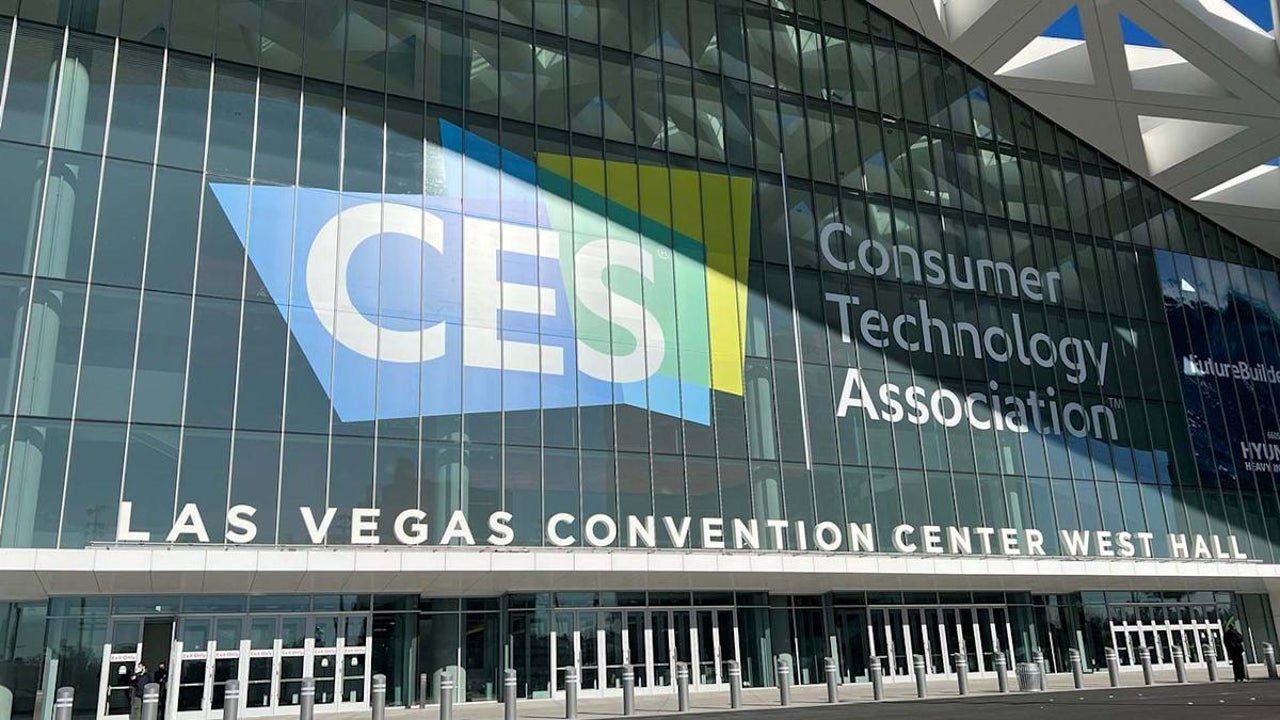
The start of the year has already become synonymous with CES in Las Vegas. The huge electronics show arrives with an avalanche of products and services where artificial intelligence acts as the common thread behind almost everything. With around 141 000 attendees and more than 3 500 exhibitors on site, what can we expect from CES 2026?
AI and Health: the major pillars setting the pace of the show
This year’s edition focuses on a mix of ubiquitous AI, robotics in multiple formats, digital health, and content created with new tools. From the very first minute, as reported by AP News, we’ll see AI in laptops, phones, TVs, home appliances, and productivity platforms, with Jensen Huang presenting Nvidia’s latest solutions and AMD’s Lisa Su delivering a keynote focused on how to bring AI into everyday devices and services. Lenovo, with Yuanqing Yang, joins the narrative with a presentation aimed at PCs and connected experiences.
The health track focuses on longevity, continuous monitoring, and personalized training as priorities. The goal is to give us more precise metrics and simpler action plans, both through wearables for almost any part of the body and in dedicated apps.
Robots at home and smart mobility: more and better proposals
Robotics will arrive in force at the show thanks to a new wave of humanoids, home assistants, and industrial automation aimed at real-world workflows. LG will show its “CLOiD,” a helper designed to manage household tasks and coordinate with the rest of the ecosystem. Meanwhile, Hyundai will step forward in robotics and manufacturing, with proposals spanning both the assembly line and logistics.
Mobility will focus on autonomous vehicles, drones, smart boats, and also new layers of software. The idea is to offer safer routes, greater energy efficiency, and connected experiences capable of integrating with our phone and watch. At the smart-city level, we expect to see proposals around sensing and orchestration, with tools that, once again through AI, prioritize predictive maintenance and reduced wait times in essential services.
Energy, infrastructure, and the computing power challenge: a smart planning proposal
The AI growth we are already experiencing requires infrastructure capable of sustaining workloads—and doing so with clean, stable, scalable energy. In the part of the show focused on energy, we find proposals for more compact generation—including a small-scale nuclear development—and efficient thermal management systems for data centers and edge computing. More performance per watt, better use of hardware, and energy planning that supports the rest of the infrastructure.
Everything points to a year in which, at CES, we’ll see more examples of how AI can stop being an idea and become a cross-cutting feature across many products and systems. In our day-to-day lives we’ll see laptops with more efficient accelerators, phones with assistants that understand our context better, wearables with more precise health functions, and homes with specialized robots for certain tasks. A very interesting approach that gets us ready for the surprises of CES 2026.
Architect | Founder of hanaringo.com | Apple Technologies Trainer | Writer at Softonic and iDoo_tech, formerly at Applesfera
Latest from David Bernal Raspall
You may also like
 News
NewsWe already know the first details about Spider-Man: Brand New Day
Read more
 News
NewsNon-governmental organization confirms that Microsoft is working closely to provide "digital weapons" to ICE
Read more
 News
NewsTodd Howard confirms that Starfield 2.0 will be completely different from the original game
Read more
 News
NewsGame of Thrones comes to theaters with a production that will fill one of the most talked-about gaps by fans
Read more
 News
NewsThe United Kingdom bans an advertisement for Call of Duty: Black Ops 7 for trivializing sexual violence
Read more
 News
NewsThe fourth Sonic movie already has its own Amy Rose
Read more