Mac (10000 programs)
Pros: Open-source MIT license, editable source and no royalties. Built-in 3D editor with lighting, physics, shaders. Accepts custom images, models, sounds, and mobile/web editors. Community contributions and developer-maintained project history.
Cons: Visual event model requires a different programming mindset. Less suited to teams needing direct C++ text scripting. Learning the editor layout takes time for code-first developers.
Pros: App Groups keep related windows highlighted together. Exclusion list lets specific applications remain unaffected. Native macOS rendering optimized for low GPU usage. Scriptable workflows and Homebrew support for automation.
Cons: Advanced features depend on recent desktop OS versions. Focus model keeps background visible rather than hiding it.
Pros: End-to-end encryption enabled by default for one-on-one chats and calls. High-definition voice and video calling available on the desktop client. Full synchronization of chats, call history, and contacts across devices.
Cons: Requires active mobile Viber account for desktop activation. Viber Out needed to call non-Viber phone numbers. Occasional activation issues reported by some users.
Pros: Hierarchical 'cells-inside-cells' grid models true nested data structures. Very small memory footprint; can use as little as 5MB for large document. Exports to XML, HTML, CSV, and plain text formats. Supports images, text formatting, search and filtering.
Cons: Non-standard interface creates a noticeable learning curve for new users. Calculation support limited to basic functions such as sum. Zero-overhead UI reduces visual cues that aid newcomers.
Pros: Internal codec set plays major and niche containers without extra setup. Optimized rendering and hardware acceleration for UHD and high-bitrate playback. Advanced subtitle engine supports complex styles and Ruby tags. Runs as a 64-bit app compatible with macOS 10.10 or later.
Cons: Mac build is more streamlined and lacks some legacy Windows features. Deep customization is tucked behind a minimalist interface, raising discovery time.
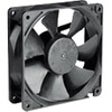
Pros: System Preference Pane integration keeps controls inside desktop settings. Background daemon monitors temperatures while keeping CPU impact low. Safety fallback preserves the original automatic fan control logic. Real-time CPU temperature and fan RPM readouts for immediate feedback.
Cons: Designed for older Intel Mac laptops, not current system architectures. Manual adjustments require technical judgment to avoid higher temperatures. Superseded by more recent fan-management utilities with broader hardware support.








.png)