
News
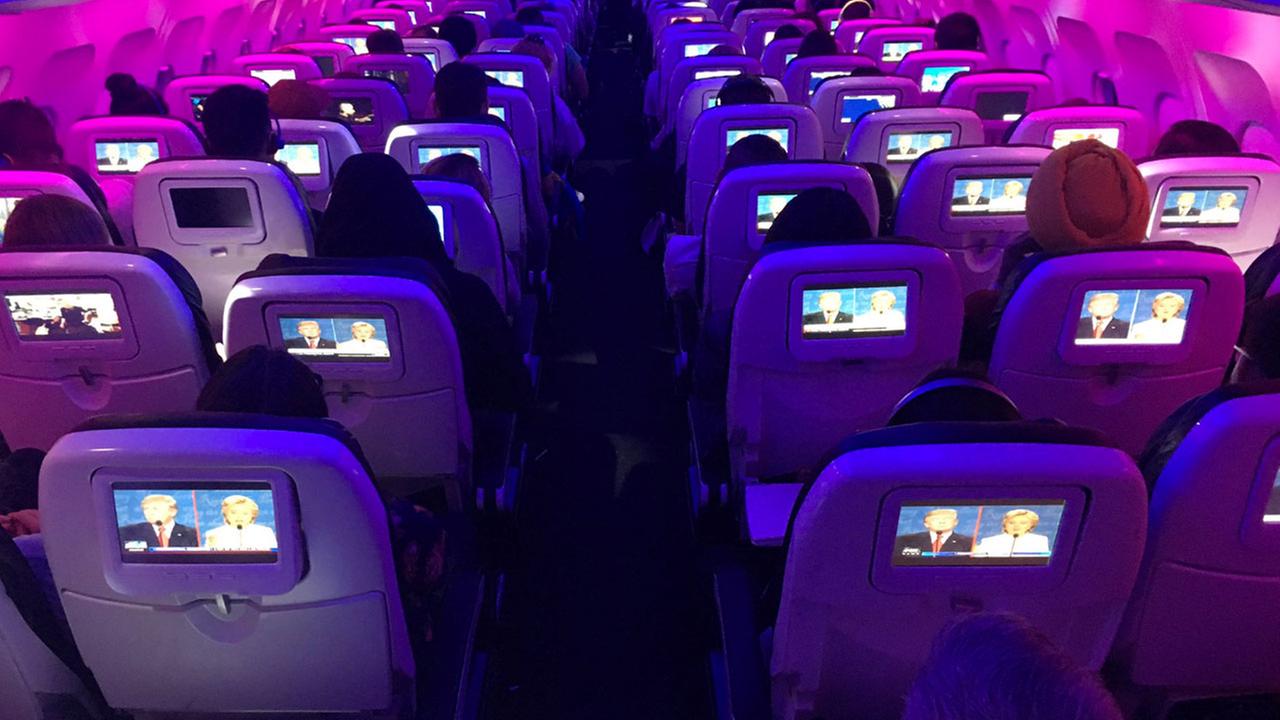
In-flight displays could be watching you

- March 7, 2019
- Updated: July 2, 2025 at 5:15 AM
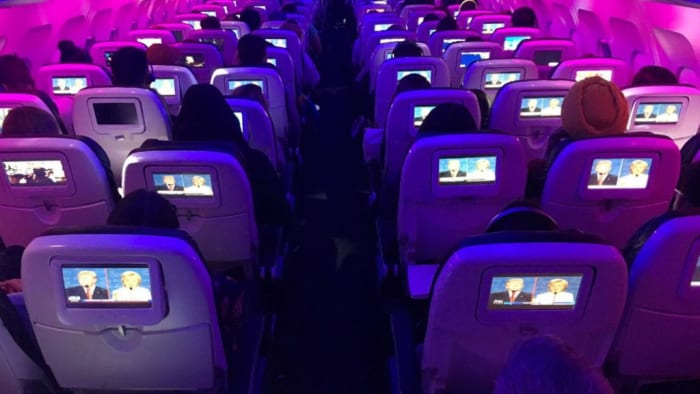
Can’t we catch a break? It’s bad enough Android apps are stealing our data, and hundreds of millions of our emails have been exposed. Now we’ve got to worry about our in-flight movies spying on us too?
Just found this interesting sensor looking at me from the seat back on board of Singapore Airlines. Any expert opinion of whether this a camera? Perhaps @SingaporeAir could clarify how it is used? pic.twitter.com/vy0usqruZG
— Vitaly Kamluk (@vkamluk) February 17, 2019
Apparently, we do, as three major airlines have already confirmed our fears: United, American, and Singapore Airlines not only admit to having cameras placed beneath viewing monitors, but they have no plans of removing them. “These cameras on our newer IFE systems were provided by the original equipment manufacturers,” Singapore Airlines said in a tweet. The justification for what otherwise seems an egregious breach of trust is that while the cameras are there, they are not actively watching passengers. “We have no plans to enable or develop any features using the cameras,” they immediately explained.
Good to know they’re not already watching us, at least, but honestly it’s small comfort. Will passengers even be aware should they be turned on? If you think this sounds like a scandal waiting to happen, you’re not alone.
Which begs the question …
Why are there in-flight cameras to begin with?
So if these cameras are not on, what’s the point? “This is a standard feature that manufacturers of the system have included for possible future purposes such as video conferencing,” a United spokesperson explained.
Panasonic Avionics (the maker of the IFE system) acknowledged the outrage by arguing their actions were in compliance with General Data Protection Regulation (GDPR), the data protection law for the European Union. “Our cameras have never been activated on United aircraft,” a spokesman of United Airlines assured, “and we have no plans to use them in the future.”
Some may be assuaged by this claim, but let’s address the elephant in the room: Just because an airline isn’t spying on its passengers with in-flight cameras doesn’t mean a third-party hacker can’t easily access them. After all, if a hacker can slip into someone’s home via IoT devices, who’s to say it’s not possible on a major airline?
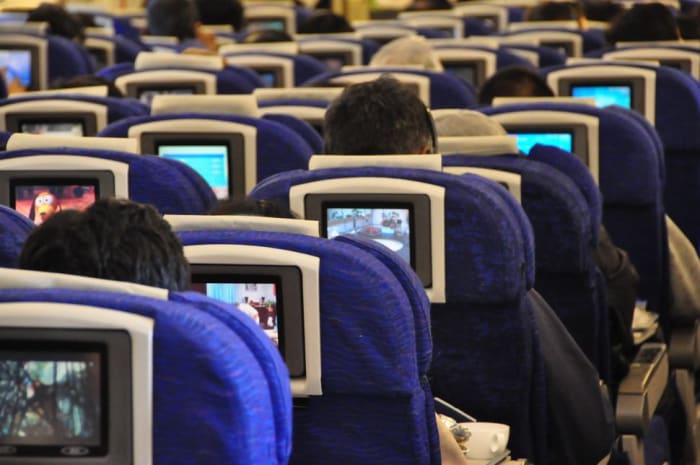
“As far as IFE is connected to the Internet, there is a possibility of remote hack and espionage if such devices can be activated in software,” said Kaspersky’s Vitaly Kamluk.
The Airline Passenger Experience Association (APEX) asserts these fears are misplaced, however, with their CEO Joe Leader claiming that “the greatest risk to airline passenger privacy breaches come from their own smartphones, tablets, cameras, computers, and smart devices used in private settings.”
Kamluk disagrees, arguing that “the true risk comes from potential unauthorized access to these devices from powerful malicious attackers.” Until a scandal breaks out we’re likely not going to know who’s right here. On the other hand, could this technology one day be praised for its benefits?
Can these be helpful?
Maybe we’re asking the wrong questions. Like all manners of new technology, the benefits may outweigh the risks. After all, there are still millions of people on Facebook despite the numerous privacy risks. Likewise, can we benefit from in-flight cameras?
Leader argues that there are several advantages to these cameras: “Since the advent of the smartphone a decade ago, airlines realized that they need to be thinking ahead to serve the future travel experience,” he said in a statement. “The systems selected years ago are now on aircraft today and in many cases will be on aircraft for the next decade. With explicit customer permission, airlines will be able to provide better service and safety to their passengers using new technology.”
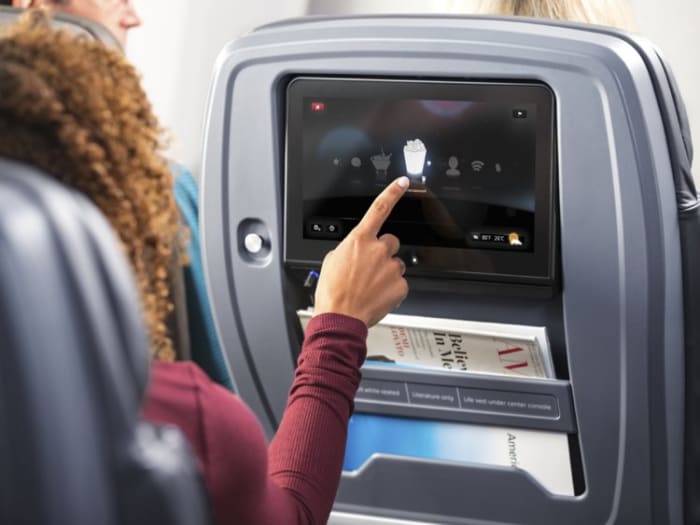
It’s not unthinkable that these cameras could prove useful, sending alerts if passengers are suddenly sick, or monitoring for incidents like assault, theft, or human trafficking. “Airline passengers are typically tracked outside the aircraft dozens of times on a typical journey through stores, security, roadways, and airports by cameras without any permission,” says Leader, the point being that if there’s no outcry about it outside the plane, why should there be one on the plane? “In contrast, airlines only want to use cameras in the future with permission when technology has advanced to offer personalized service improvements that passengers desire.”
Do you think these cameras will help improve flight safety and convenience? Or is this a breach of privacy and trust that needs to be answered ASAP? Let us know in the comments below, and stay tuned for more.
You may also like
 News
NewsAfter two decades of waiting for it, this medieval game that fans kept asking for is back
Read more
 News
NewsWe do not lose faith in the adaptation of 'One-Punch Man'. The project is still going strong, although we will have to wait
Read more
 News
NewsKeke Palmer will star in the adaptation of this 1980s movie
Read more
 News
NewsIf you're a fan of Yellowstone, you can't miss this period series that just premiered on Netflix
Read more
 News
NewsThe surreal stories of Chuck Palahniuk will return to the big screen with this adaptation
Read more
 News
NewsThe director of 'Wuthering Heights' wants it to be the 'Titanic' of a new generation
Read more