Windows (10000 programs)
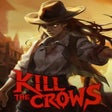
Pros: One-hit-kill rule creates high-tension, meaningful encounters. Unlockable revolvers and gear change run strategy. Lo-fi pixel art preserves clarity in chaotic scenes.
Cons: Steep, unforgiving learning curve for new players. Permadeath forces frequent restarts of progress. Single arena format may feel repetitive over long sessions.
Pros: Modular architecture places behavior in loadable Python modules. Search-centric, keyboard-first interface for fast command access. Cross-platform packaging: Windows installer and Linux AppImage available. Open-source GNU GPL v3+ license enables code inspection.
Cons: Requires Python knowledge to write custom modules. Project mirrors indicate End-of-Life, updates may be unavailable. Security depends on chosen modules and their external integrations.
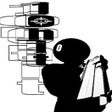
Pros: Mind-hijacking mechanic creates tactical mission variety. Stylized 3D faithfully evokes 2000s stick-figure flash aesthetic. Physics-based combat enables environmental interactions. Demo holds an "Overwhelmingly Positive" rating on Steam.
Cons: Keyboard rotation controls require extended learning. Linear mission design limits freeform experimentation. Single-player only, no multiplayer modes.
Pros: Contains 653 unique gaming glyphs covering consoles, controllers, and arcade machines. Provided as TrueType (.ttf) for broad application compatibility. Vector-style, pixel-art glyphs retain clarity when scaled.
Cons: Commercial use is subject to donationware or personal-use license terms. All icons are embedded in a single font file, no separate raster assets. Includes franchise characters, commercial reproduction may require license clearance.
Pros: Handwritten script suited to invitations, social graphics and craft labels. Includes 192 glyphs, covering accents and the Euro symbol. Distributed as a TrueType (.ttf) file for broad application compatibility. Small file size (≈43 KB) keeps downloads and system footprint minimal.
Cons: Free for personal use only; commercial use requires author permission. Decorative script intended for display, not long-form body text.
Pros: Dancing baseline produces an organic, handwritten appearance. Over 400 glyphs for varied decorative letter combinations. OpenType alternates and swashes enable typographic substitution. Includes both .OTF and .TTF for broad application compatibility.
Cons: Publicly available copy is personal-use only for commercial projects. Decorative alternates require manual insertion outside professional apps.
Pros: Nine stylistic variants offered in a single family. Demo package contains 332 glyphs for headline compositions. Multilingual support for Latin, Turkish, and Central European text. Supplied as .otf/.ttf, usable in digital and print workflows.
Cons: Demo version restricted to personal use; commercial license required. Designed for headlines, not suitable for body text or long copy. Distressed styles (Eroded, Destroyed) alter forms, limiting small-size use.
Pros: Distinctive claw-style appearance for headlines and posters. Supports uppercase, lowercase, numerals, and accented characters. TrueType (.ttf) file for broad desktop compatibility. License permits personal and commercial use including logos.
Cons: Highly stylized forms reduce legibility at small sizes. No multiple weights or official alternates included. Language coverage limited to Latin ranges.
Pros: TrueType (.ttf) format ensures compatibility with major desktop design applications. Square tetromino construction creates a recognizable retro gaming headline style. Works well for posters, thumbnails, and game-related branding.
Cons: Limited glyph set (61 glyphs) may lack lowercase, numbers, or punctuation. Commercial projects require a separate license from the designer.
Pros: Contains 93 distinct athlete silhouettes.. Single TrueType (.ttf) file consolidates nearly 100 icons.. Icons typed directly via mapped keys in text editors and design apps.. Compatible with Microsoft Office and Adobe Creative Cloud..
Cons: Commercial use requires checking licensing or author permission.. No standard alphanumeric letters, it is a dingbat font.. Black silhouettes only; no color variants included..
Pros: Sixty distinct hand-drawn frame glyphs in one font file. Glyphs mapped to keyboard characters for rapid insertion. Vector-based glyphs maintain sharpness when scaled. Lightweight installer under 200 KB, easy to add to system fonts.
Cons: Free for personal use only; commercial licensing required. Limited to decorative frames, not a general-purpose text font. Only 60 designs in the single font file.
Pros: Distinctive 3D outline and fill variants for layered color work. OpenType and TrueType files compatible with major design suites. Vector letterforms suitable for large-scale printing. Includes uppercase, lowercase, numbers, and basic punctuation.
Cons: Basic Latin set (90+ glyphs) limits extended language coverage. Commercial use requires a separate license.
Pros: Delivered in TrueType and OpenType formats for broad application support. Full version includes decorative swashes and alternate characters. OpenType ligatures supported in OpenType-aware software. Works across Windows, macOS, and Linux systems.
Cons: Public build is personal-use only; commercial license required. Free/demo version omits full glyph and alternate set. Base distribution covers standard alphanumeric and basic punctuation only.
Pros: Extensive symbol library and UML support for formal modeling. Templates for flowcharts, mind maps, ER and data flow diagrams. Low installation footprint and modest system requirements. Exports to PDF, PNG, JPG, GIF, BMP and SVG.
Cons: Interface feels somewhat dated compared to modern web-based alternatives. Emphasizes simplicity, omitting advanced enterprise automation features.
Pros: Playful handwritten strokes that give headings a hand-drawn feel. Symbol-triggered decorative underlines without extra software. Vector outlines in OTF/TTF suitable for print and digital use. Embeddable on the web via @font-face and mobile import.
Cons: 178 glyphs may not cover extended language needs. Underline symbols can conflict with data-driven or templated text. Primarily designed for display, not continuous body copy.